


 +86 18130251359
 teflowpumps@tlpumps.com

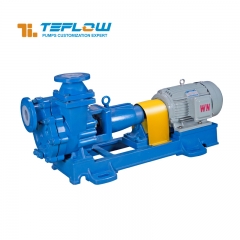
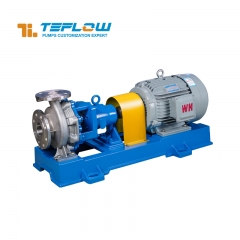
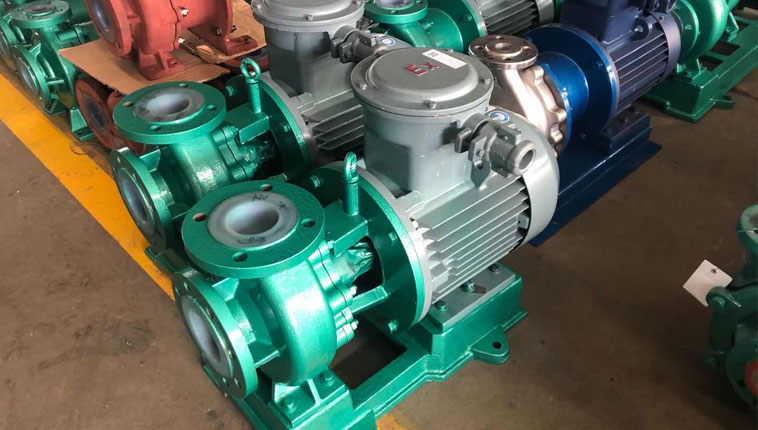
In chemical production, chemical pumps act as the core power source for fluid transportation, and the flow rate selection directly determines the system efficiency and operational safety. To avoid the risks of working condition fluctuations, many engineers intentionally set an increased safety margin, leading to the actual pump flow rate far exceeding the process requirements. This "better oversized than undersized" choice may seem reliable, but in reality, it causes the pump to deviate from the Best Efficiency Point (BEP) for a long time, triggering problems such as a sharp surge in energy consumption, intensified vibration, accelerated wear of components, and even an increased risk of cavitation, which significantly raises the total life cycle cost. To address this issue, the following suitable solutions can be selected based on process requirements, cost budgets and regulation precision.
I. Emergency & Convenient Solutions: Discharge Valve Throttling and Bypass Regulation
These solutions require no equipment modification, feature simple operation and fast response, and are suitable for temporary small-range flow adjustment or emergency scenarios, making them the most implementable on-site measures.
1. Discharge Valve Throttling Regulation
Similar to pinching a water pipe to control water flow, this method increases the pipeline resistance by closing the discharge valve of the pump pipeline, forcing the pump's operating point to move left along the performance curve, thus reducing the output flow rate. No additional equipment investment is needed for this method. Operators can conduct real-time monitoring through a flow meter and adjust the valve opening step by step, with each adjustment range controlled within 10 degrees. Continue the operation only after the system stabilizes to ensure precise flow matching.
It boasts the advantages of low cost and rapid response, making it ideal for temporary adjustment scenarios such as batch reaction feeding. However, its disadvantages are also prominent: a large amount of energy is lost in the form of heat during the throttling process, resulting in severe energy waste—data shows that reducing the flow rate by 20% only cuts the power consumption by 10%. Long-term large-scale throttling will also accelerate the wear of valve seals and may cause pump body vibration due to pressure concentration. Important Note: Never adjust the suction valve, otherwise it will lead to insufficient suction volume, triggering cavitation or magnetic coupling decoupling failure of magnetic drive pumps.
2. Bypass Recirculation Regulation
A bypass pipeline is added between the pump's discharge and suction ends to recirculate part of the conveyed medium back to the storage tank or suction side. The actual output flow rate is reduced by adjusting the opening of the bypass valve to control the recirculation ratio. This method ensures the pump operates in the high-efficiency zone at all times, effectively avoiding cavitation, pump body overheating or material accumulation of easily crystallizable media under low-flow conditions, and is particularly applicable to scenarios that require maintaining a minimum flow rate such as boiler feed water pumps.
It has the advantage of protecting the pump body and preventing equipment damage under extreme working conditions. The downside is severe energy waste, as the power consumed to drive the recirculated medium is completely ineffective. It is only suitable for emergency pressure relief or micro flow adjustment, and not recommended as a long-term operation solution. In addition, supporting measures are required to handle the temperature rise or vaporization of the recirculated medium.
II. High-Efficiency & Energy-Saving Solution: Variable Frequency Speed Regulation Technology
For long-term flow adjustment with the pursuit of energy-saving benefits, variable frequency speed regulation is the optimal choice, especially for high-power pumps or working conditions with frequent fluctuations in flow demand. Its core principle is to change the motor speed through a frequency converter and realize flow regulation by virtue of the laws of fluid mechanics—the pump's flow rate is proportional to the speed, the head is proportional to the square of the speed, and the power consumption is proportional to the cube of the speed, delivering remarkable energy-saving effects.
For example, when the motor speed drops to 80% of the rated value, the flow rate decreases to 80% synchronously, and the power consumption is only 51.2% of the rated value, enabling over 30% savings in electricity costs during long-term operation. This solution offers a wide regulation range (0-100% of the rated flow rate) and can achieve linear regulation. It also supports automatic flow stabilization through PID control, ensuring stable operation and reducing the risk of cavitation. Meanwhile, the soft start function can protect the motor and pump body, extending the service life of the equipment.
It features high efficiency, low energy consumption and precise regulation, can adapt to complex changes in working conditions, and conforms to the energy conservation and consumption reduction trend of the chemical industry. The disadvantage is the relatively high initial investment, as it requires matching special frequency converters and adapted motors, and has certain technical requirements for operation and maintenance personnel. Nevertheless, from the perspective of total life cycle cost, the energy-saving benefits generated can usually cover the initial investment within 1-3 years.
III. Permanent Adaptation Solutions: Impeller Trimming and Structural Modification
If the working conditions are confirmed to be fixed for a long time and the flow demand is permanently lower than the original design value, structural modification can be adopted to achieve precise matching between the pump and the system, avoiding energy loss caused by long-term regulation.
1. Impeller Trimming Modification
The outer diameter of the impeller is reduced by turning to permanently lower the pump's flow rate and head, bringing the pump's operating point back to the high-efficiency zone. Impeller trimming must follow strict hydraulic laws, and the trimming amount is usually controlled within 15% of the original diameter. Excessive trimming will seriously damage the hydraulic performance of the pump, leading to a sharp drop in efficiency, intensified vibration, seal leakage and other problems. Data shows that reducing the impeller diameter by 10% decreases the flow rate by about 10% and saves 27% of the power consumption.
It has the advantage of no additional regulation loss after modification and stable operation efficiency, making it suitable for fixed working conditions where both the flow rate and head need to be reduced synchronously. The disadvantages are the irreversibility of regulation—once the trimming is completed, the pump can no longer adapt to higher flow demands—and the need for precise calculation and operation by professional manufacturers. Equipment shutdown is required during the modification period, which affects production continuity.
2. Pump Unit Interlock Adjustment
For multi-pump parallel systems, flow matching can be achieved by shutting down some pumps and adjusting the number of operating pumps. If the excessive flow is caused by an overly large head margin, a multi-pump series connection can be adopted to increase the system head and reduce the actual output flow rate. This solution is suitable for flow regulation in large-scale chemical installations. It is required to ensure all pumps are of the same model and follow the "start first, shut down later" principle for the start-stop sequence to avoid water hammer effect caused by pipeline pressure fluctuations.
IV. Solution Selection and Precautions
When selecting a treatment solution, it is necessary to comprehensively consider the stability of working conditions, regulation precision, initial investment, energy consumption cost and safety risks, and prioritize the principle of "energy conservation first, adaptation on demand": select discharge valve throttling for temporary small-range regulation; adopt bypass recirculation for emergency scenarios that require pump body safety protection; prioritize variable frequency speed regulation for working conditions with long-term flow fluctuations; and choose impeller trimming modification for fixed working conditions with large flow deviations.
At the same time, note the following: when chemical pumps convey corrosive, flammable and explosive media, the regulation method must take into account seal safety and explosion-proof requirements, and explosion-proof equipment must be selected for variable frequency speed regulation; regardless of the regulation method adopted, it is necessary to ensure the pump's operating point is within the range of 70%-110% of the Best Efficiency Point to avoid equipment damage caused by long-term deviation; monitor parameters such as flow rate, pressure and motor temperature regularly, and troubleshoot faults in the regulation system in a timely manner to ensure stable operation.
In conclusion, an oversized flow rate selection for chemical pumps is not an irreparable issue. The key is to select scientific treatment solutions based on actual working conditions to achieve the operational goals of "precise adaptation, high efficiency and energy saving, safety and long-term operation", and avoid energy waste and equipment loss caused by blind regulation.



 +86+0563-5093318
